Start with what teaching gave you, then build the rest of the skills and a portfolio to prove them.
Can a teacher become an instructional designer?
Quick answer: Yes.

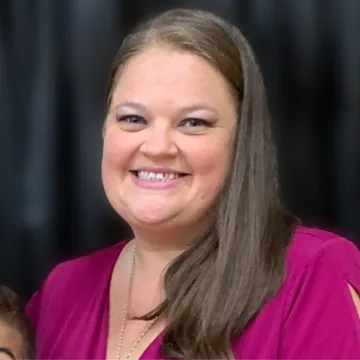
Krysten Smith
Former career: Middle school science teacher, 20 years
Now: Technical Instructional Designer, Honda

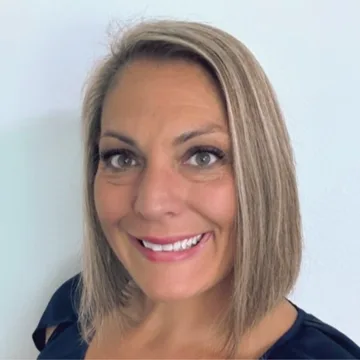
Portia Phillips
Former career: Teacher
Now: Associate Technical Course Developer, McKesson

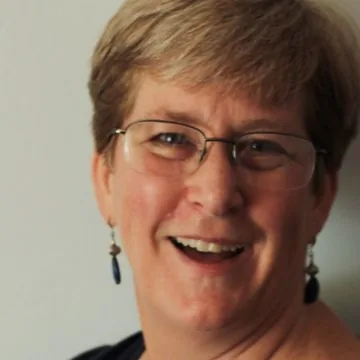
Nicole Heroux
Former career: Teacher
Now: Learning Experience Designer, DoorDash
Want the full roadmap? The Ultimate Guide covers the whole path.
A real lunch. A doctor's appointment without five hours of sub plans. Here's how grads describe the work week now.
And at night I get to be with my family. I have more to give. Like, when I was in education, when I got home, I was done, I was toast. I had nothing left to give my family. So now when I get offline, I completely... Like, I can shut it down, it’s done. I walk out of my office and I’m with them. I don’t have anything else to think about, worry about. And that’s life now.
Oh man, my life is completely different. I was so tired and exhausted by the end of the day that I just wasn’t myself anymore. And now I am just, I’m happy. […] At the end of the day, it’s done. And it is so nice to kind of have that feeling. I am a better mother. I’m a better wife, I’m a better daughter, and I’m able to be the kind of friend that I want to be, and I’m gaining back my life, and it has been absolutely amazing.
No more intercom. No more “Who Let the Dogs Out?” blaring in the hallway between classes. No more constant chatter. No more harsh fluorescent lighting overhead. Working from home is FREEDOM for me. […] Heck, I even love going to the powder room for a little bladder elimination whenever I want.
It’s the little things, like if I’m not feeling well, or my kid is not feeling well, I can call my boss and say, Listen, I need a day. And it’s okay. I don’t need to hyperventilate with putting together sub plans as quickly as I need to. And if I’m sick, I’m actually sick. Like I can’t, I close my computer and I can actually be sick.
A year ago I would have never imagined I would be where I am right now, working as an instructional designer with my nights and weekends spent doing what I want to do rather than working around the clock.
I felt very guilty, taking a chance on myself. Taking a loan out for myself. Leaving my kids in the middle of the year. But it’s so worth it. I’m happier than I’ve ever been. I have more time. I just, I feel free.
Now I actually have time for my hobbies. I have time to spend with the people I love and be present.
My company and my boss trust me and treat me like an adult. They know I’m going to get my projects done.
I close my computer when I am done working and go play with my kids. No one expects me to do anything “for free” or guilts me when I can’t or don’t want to. My mental health and spiritual life are both flourishing. I’m a better wife, mom, friend, SELF! Oh yeah....and I’m hosting Thanksgiving for 15+ people and not stressed about it.
You've read ID job posts at night and recognized some of the skills they ask for. Maybe you've run your resume through ChatGPT, let a Storyline trial run out, or applied and heard nothing back. And under all of it is the worry teachers bring up again and again: that a hiring manager will read your resume and only see a teacher. Your portfolio is how they see the rest.
Your resume is about what you've already done, and some of it applies to corporate ID. It's on you to show how. You can't expect a hiring manager to read teacher language and make the connection. The Educator to ID Skills Translator gives you the words.
Some of what the job needs isn't on your resume yet, because you haven't done it. You can't list ten courses built in Storyline. So you learn those skills, then build a portfolio that proves you can do them. Start with the free workshop, Become an AI-Ready Instructional Designer, Nov 9 to 12, to see every piece a corporate ID portfolio needs.
To get hired, you need both halves.
Your resume shows what you've already done, translated for corporate ID. Your portfolio proves the skills you've learned since. Hiring managers want to see both.
Listen to this episode of the podcast
Resume Rewriting: Translating Teacher Skills to Instructional Design Skills
From Jumpstart Your Instructional Design Career, my weekly podcast on moving into instructional design.
Subscribe on Apple Podcasts or Spotify
In this order. Skipping ahead to the job search is one of the most expensive mistakes teachers make in this transition.
Every March you tell yourself this is the year. Before you spend a dollar or a summer on it, get a real answer. The quiz shows you how much of an instructional designer you already are and what your specific starting point looks like.
Get the full picture before you commit: the roles, the pay, the day-to-day.
You need to learn both: the corporate ID process and the eLearning authoring tools, Storyline and Rise, with AI as part of how you work. Job postings name those two tools most, interviews may ask about them, and your portfolio shows what you can do in them.
Your resume is where your past gets read, and right now it's written in teacher language. “Differentiated instruction for diverse learners” means nothing to a corporate recruiter. The Skills Translator does a first pass on the words. Translating gets you part of the way, and step five does the rest.
This is where you fill in the gaps, and it's really important that you don't skip this step. You're building a portfolio for the job you want, not the job you have, so the samples are corporate: training for a company's employees, built from scratch. They don't have to match an industry, but they can't be education samples, because an employer needs to picture you doing the work for them.
Build each sample in the real tools, with AI as part of how you work, and take it through several drafts with feedback on every one, the same way your students' essays get better draft by draft. Start with the free workshop, Become an AI-Ready Instructional Designer, Nov 9 to 12, so you know what you're building toward.

Applying into silence is what we hear most from teachers. Nobody who passes on you says why, so get a hiring manager's read on what your portfolio shows, then put it in front of the right people. Start with real openings, and don't run the search alone.
Here's what Applied Instructional Design Academy (AIDA) grads report, sample sizes included.
Some grads are earning $10K to $15K more five years later, and corporate raises tend to be much bigger than teaching raises. Results vary.
 Elaine AthertonTeacher → Instructional Designer, Purpose Financial
I more than doubled my teaching salary, and I love that I get to work 40 hours a week and then I’m done.
As a single mom of 3 and a teacher, I decided to invest in myself. […] It was a big investment and I’m happy to say that at the end of the 9 month program, I have accepted a position paying $23,000 more than my teaching salary.
As a teacher, I felt like it was insulting how little we got paid with how much we did. And I can say that since transitioning now into instructional design, that job, that career exists, and I couldn’t be more happy that I took the leap of faith last year.
This is the most money I’ve made in my life without killing myself to do, to make money.
This job (including annual bonuses) almost doubled my past teacher pay.
I took a very significant salary increase. I was prepared to negotiate, however, I knew what the salary range was for the position that I was going to be offered. […] And I did not end up doing any negotiating even though I was prepared to do so because they offered me the top salary range right outta the gate. I didn’t have to negotiate for it.
LS&D was built around career changers, and teachers are the biggest group we serve. We've reviewed hundreds of portfolios from former teachers and watched them get hired at Salesforce, Disney, Google, Cleveland Clinic, and hundreds of other companies.
I was teaching a surgeon how to use a speech to text application while they’re in the middle of surgery. So it was, it is very cool and, honestly, I thought that by leaving my students, I wasn’t going to be as fulfilled, but like teaching a doctor, a surgeon, how to use a tech tool [is] equally as fulfilling.
As a teacher, you wear 750 million hats. […] I think a lot of educators get stuck in like, I’m a teacher. I can’t do anything else. It’s like, dude, you’re a teacher. You can do anything else because you have taught in classrooms. And because of that, you literally could probably do any other job. And it would be a breeze compared to what you’ve been doing.
My advice would be don’t pigeonhole yourself into education. You have many transferable skills, and people will recognize that. And I think the possibility of doing something different is out there. Just don’t say I can only be a teacher because that’s what I went to college for.
So many transferable skills that I’ve brought over from teaching into the ID world, my creativity and my attention to detail. I always thought that being able to pick out all the little mistakes in something was not such a good thing and oftentimes annoys people, but in my position it’s valued. They’re like, thank you for catching this. And that means a lot.
I was very fortunate in my first contract landing to have landed with a major airline. And what I do is essential for pilots to maintain their status, to be able to fly safely. And so knowing that there are billions and billions of people who fly across the world and our pilots carry them, I think that the learning that I helped develop is extremely meaningful and it’s rewarding.
One of my fears [of] leaving teaching was just leaving teaching. Like what am I going to do, how am I going to feel, […] I’m not having this ability to help see these kids and the light bulbs go off. But I’m still helping people learn, and I think that’s what matters to me.
So I would just encourage anyone who has felt like, you know, if you’re retiring from teaching that that is the end, it’s not, you know. A lot of people go into teaching at a very young age and they have a full career and you still have plenty of time. […] You’re kind of expected to work into your 60s and possibly 70s. So, so sure, start a new career. You’ve got plenty of time to make it a good one.
I think the ageism issue is more internal for me than external. Nobody brings it up. It’s never been an issue with any interview I’ve ever done. The thing that’s ever been an issue has been experience more than anything else. […] So it was definitely a concern when I went into the field, considering I started applying at the age of 51. And I was worried. But no, it hasn’t been an issue.
Just like Brenda, I was nervous about the Zoom interview because I don’t look like I’m, you know, 20-something. So I was very nervous about it. And it went well […]. Right now on the team, there’s three of us who are 50 and up, and then this wonderful 24-year-old who we’re all mothering to death.
Maybe you're an instructional coach, a reading or dyslexia specialist, an interventionist, a media specialist, a counselor or another K-12 educator outside the classroom. Maybe you left teaching for ed-tech or curriculum work, took another job, or you're between jobs right now. This path is yours too.
Coaching teachers and running PD give you a head start, because you've already been designing learning for adults. Put that work front and center on your resume: employers often don't know how things work in education and may assume everything you did was for kids. What you add is the same list every teacher works through: the corporate ID process, designing training for adults at work, and the tools. Then you build samples that show all three.
Left teaching for a corporate job? Take the path that fits where you are now: this one, the L&D path or the path from another field.
Grads who made the move from these roles
They literally called me the same day I applied, [citing] my previous work as a reading specialist being of top interest and told me I was their first and hopefully only interview.
You’re an educator. That’s your job. That’s not your identity. And I think sometimes we’re fed that education is our identity. And so we feel guilty if we say this is no longer working for us.
None of my work goes outside of my 40 hours. It can all very much definitely be done in that time. And it’s so flexible. […] I have flexible time off, unlimited time off. […] If I have doctor’s appointments, I don’t need to worry about it.

Dana Weber
Former career: Instructional technology coach
Now: Senior Technical Instructional Designer, Graebel Companies

Michal Hope Brandon
Former career: School library media specialist
Now: Instructional Designer, Viega

Kari Nelson
Former career: Media specialist and technology coach
Now: Curriculum Developer, AVIXA

Jill Schlessinger
Former career: High school teacher, then customer success
Now: Learning Architect, Arizona Public Service
Julie Taegel
Former career: Instructional coach, then district assessment specialist
Now: Instructional Designer, Compass Group USA

Idalia Herrera
Former career: Classroom teacher, then K-8 family and community engagement manager
Now: Instructional Designer, WEX

Missy Cozart
Former career: High school instructional coach
Now: Content Developer, Upchurch

Ramona Klein
Former career: K-5 media specialist
Now: Instructional Design Specialist, iDesign
Jill Davidian is the founder of Learning Strategy & Design and creator of the Applied ID Portfolio Method. 20+ years in instructional design, including time as a hiring manager. 1,200+ AIDA graduates. More about Jill
Last updated: November 2026
Next March can look different from this one. Three minutes, a handful of questions, and you'll see your skills the way a hiring manager would.
Take the QuizJumpstart Your Instructional Design Career
A weekly podcast and a Substack on moving into instructional design, from me.