

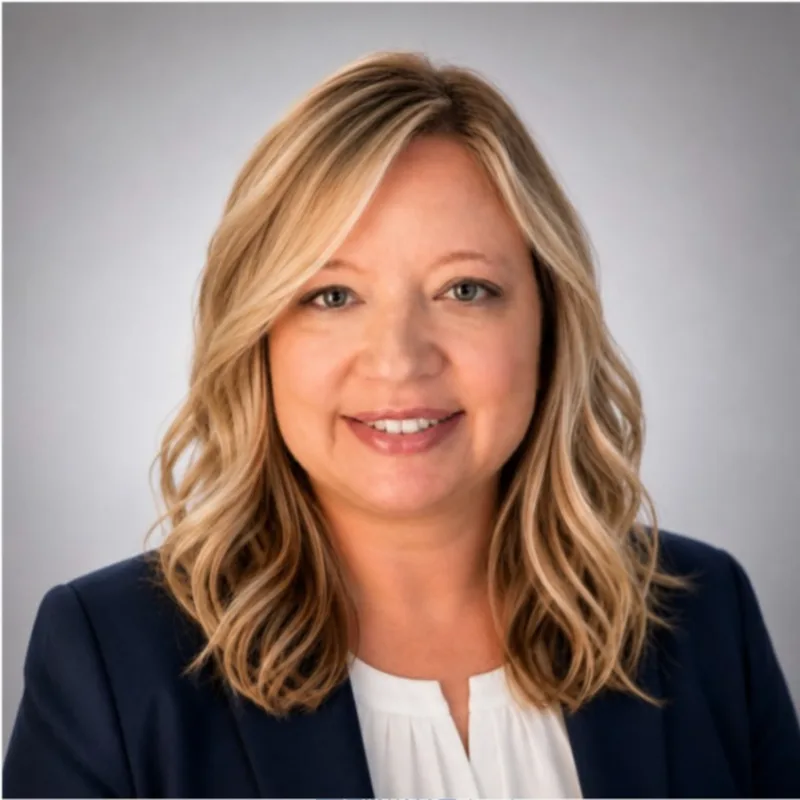
Amanda taught middle school science for 18 years in one of the highest-paying districts in Indiana. Five years in, she already knew she wanted something different. She did what the advice says to do: she got a master's in educational technology from Indiana University, learned the learning-management systems, even interviewed for jobs outside K-12. But this was before remote work was normal, and she wasn't ready to give up her summers for an office. So she stayed, and spent ten more years teaching, with a summer side gig facilitating online courses.
The degree never closed the gap.
Amanda was her district's CPR instructor. In the middle of a training session, she told a colleague she was so burned out she couldn't teach anymore. The colleague had been through AIDA and told her about it. Amanda knew instructional design from her master's, and she knew exactly what she was missing. She signed up almost immediately and started that August.
She leaned hard on the coaching calls. She's the kind of learner who needs to see it done first, then do it alongside someone, and she got that not just from her own questions but from listening to everyone else's. Her pod became a real network: she still talks to them, and she later recommended a pod mate for a job Amanda herself had turned down. Her pod mate got it.
By December she had her Rise badge and started applying while still finishing the program.
Her first search took 150 applications over 8 weeks, with a first interview within a month. In June, a month after finishing, she landed a part-time remote W2 contract at Beacon Orthopaedics & Sports Medicine. Not the dream job. The foot in the door.
One month later, the door swung open. A corporate job she'd applied to back in February called her four months later, after a leadership change, and that little bit of paid ID experience helped her land it: a full-time corporate instructional design role at a national restaurant chain. She negotiated hybrid at the offer, then negotiated fully remote within two months of starting.
Eighteen months in, she started a second, deliberately patient search. About an hour a week, for a year, only for roles that fit: healthcare, stable, room to grow. That search ended in January at Elevance Health.
Amanda is the content creator on a team of 14 training specialists, building in Storyline, Rise, Vyond, and Camtasia, and teaching the rest of the team how to use them. Her youngest son goes to a developmental preschool 20 minutes away, and she drives him every day at 11:30. Her manager's response: put it on your calendar as a permanent out-of-office, so no one ever schedules over it.
Asked what she misses about teaching: "There's nothing I miss about it. I like this so much better. And I feel like I'm still making a huge impact."