

I go through your portfolio the way a hiring manager does and hand you the exact list of what to fix.
You did the hard part. You made the samples, put together the portfolio, sent the applications. And what comes back is a "thanks but no thanks" email, or nothing at all. No feedback, no reasons, no way to know what's wrong.
Laura Hall spent a year and a half applying on her own before Applied Instructional Design Academy (AIDA): "I got two interviews over the course of a year and a half, neither of which led any further. And so I was kind of desperate."
I will be honest. A lot of the portfolios I see were built the hard way: Storyline learned on a free trial, a sample rebuilt three times, a resume run through ChatGPT until it sounded corporate. If that sounds like yours, you're capable, and that work counts. What you haven't had is someone who hires IDs telling you what to change. The newbie tells, the little signs of someone brand new, are hard to spot in your own work. You don't know what you don't know.
Think about what a first draft is. You do as much as you can on your own, and if you could have done more, you would have. You hit your limit. To get past it, you need feedback. If you're a teacher, you have your students write more than one draft. If you write a book, you work with an editor. It's very hard to iterate on your own work when you don't have feedback, and when you apply for jobs, employers won't give it to you.
So the applications keep going out, and the reason never comes back with them. This session gets you the reason, in 45 minutes, from someone who's been the hiring manager.
 Felicia YounginerEducator (23 Years) → eLearning Developer, Advantexe Learning Solutions
 Jen SlivkaInstructional Coach → Senior Associate, Director of Learning & Development, FGM Architects
Hiring managers decide fast. Give yourself ten seconds with this portfolio, then see what a hiring manager notices.
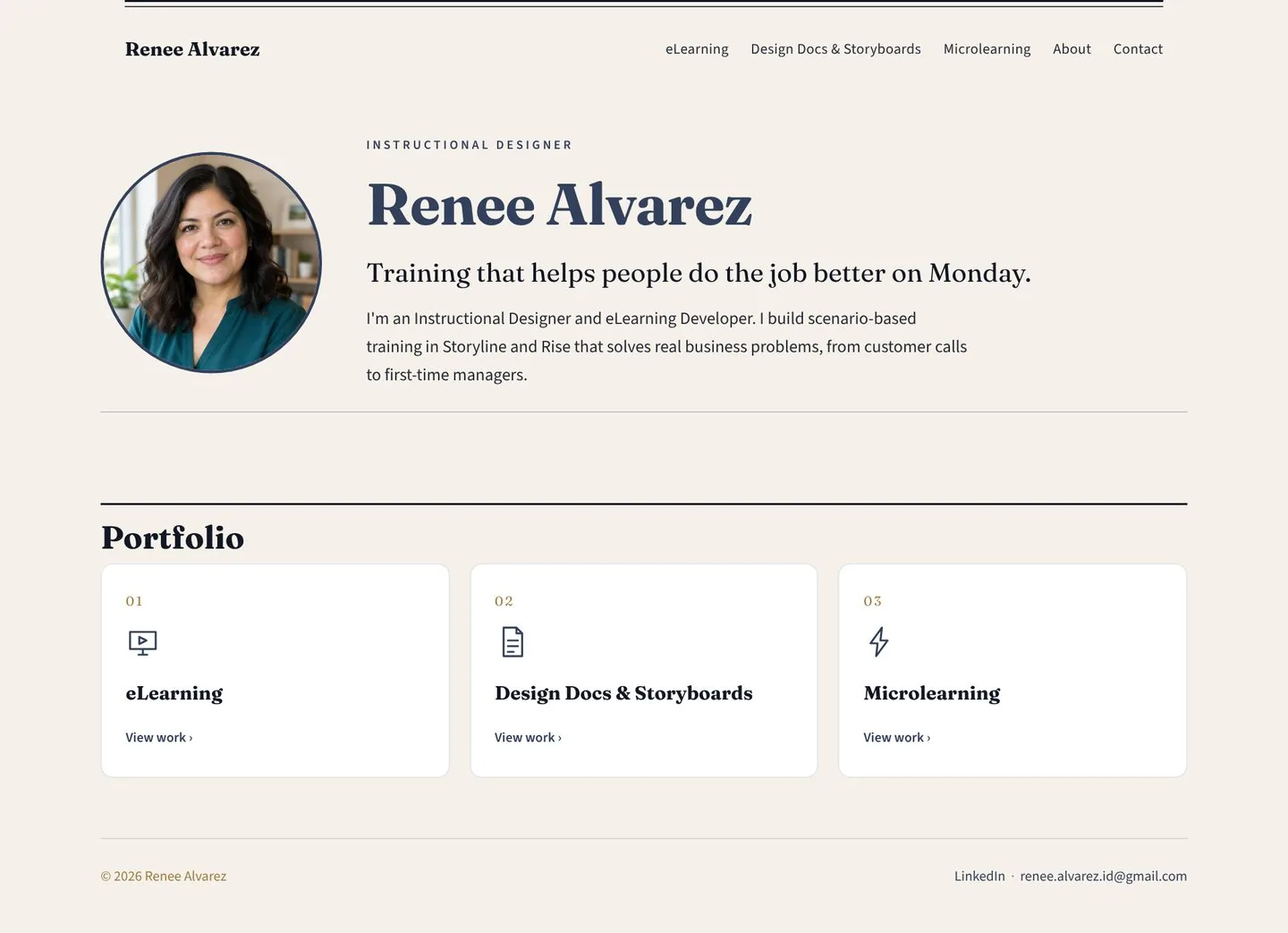
Ready? You get ten seconds.
A model portfolio built for this test. Renee isn't a real grad.
In your session, I do this same read on your portfolio, then go sample by sample.
This session is for a portfolio that's already built. I'll tell you whether yours meets the bar hiring managers actually hold. Maybe you're a career changer going after your first ID role. Maybe you're a working ID whose portfolio hasn't been updated since it got you the job you're trying to leave.
Either way, you shouldn't have to keep guessing while the rejections pile up quietly. One session tells you where you stand and exactly what to do about it.
When the silence drags on, the market and your age are the easiest things to blame. Before you decide it's either one, get an honest read on the work you're sending. Most people come into ID as a second career, and several of our grads made the move after 50.
Book it today and you could be holding your fix list this week.
Pay the $197, then pick a time on my calendar that works for you. Have your portfolio link ready.
Live on screen, together. First the 30-second read: where the eyes go, what impression lands, whether they'd keep looking. Then the deep read, sample by sample.
What reads as beginner work, what reads as experience, and what to change, in priority order. Ask me anything along the way. That's what the time is for.
The full recording of your session plus a written summary of the fixes, so you can work through the list without trying to remember what I said.
The same things a hiring manager scans for, because after 20+ years in this field I know exactly what makes them stop scrolling.
This is the big one. Do your samples match what the companies you're applying to are looking for? Can a hiring manager look at your samples and say, "I can see her doing that kind of thing for me"? I look at your topics, your level of skill, and the variety and types of samples you're showing.
Think of your portfolio like a store window. It's your front door and their first impression. If they're not impressed by the window, or they spot newbie mistakes, they don't walk in, and nothing after it gets seen.
The small choices that quietly say "I just started": in your samples, your layout, your writing. You can't spot them in your own work. I can.
Pretty samples get a glance. Samples with the reasoning behind them get interviews. I'll show you how to present the decisions, and the results, behind each piece.
Your resume says you're new. Your portfolio doesn't have to. Done right, it stands in for the years you haven't logged yet, so you can go after roles that ask for them.
Some pieces carry your portfolio. Some quietly drag it down, and one weak sample can undo three strong ones. I'll tell you what to feature and what to pull.
Employers look for AI fluency, whatever the tool. I read your Working with AI page and your sample write-ups against the LEAD AI Framework (Lock it in, Evaluate the output, Adjust and iterate, Deliver with confidence, with Protect around all four), looking for proof in your own words that you stayed in charge of the work.
You leave with priorities, so you spend your next free evening on the change that moves interviews, and skip the ones that don't matter.
I've reviewed portfolios for years, and employers keep hiring the people whose work went through my feedback.
 Zach DeSutterHigh School Theatre Teacher → Learning & Development Content Specialist, STV Incorporated
 Adriel HalliburtonTeacher (10 Years) → Instructional Designer, ISGF
“If it's really close between candidates at the end, I'll go back to that portfolio as kind of maybe a deciding, you know, push in the right direction. If everything's equal and one candidate has some really exciting work on their portfolio, that might be something that tipped the scales.”
A hiring manager once told me she'd stopped considering career changers completely. Too many thin resumes, too many rushed samples. Then she saw a portfolio that had been through my feedback process, and she hired that career changer anyway, against her own rule. That's what a portfolio can do when every piece has been held to a hiring manager's standard. It removes the doubt before the interview even starts.
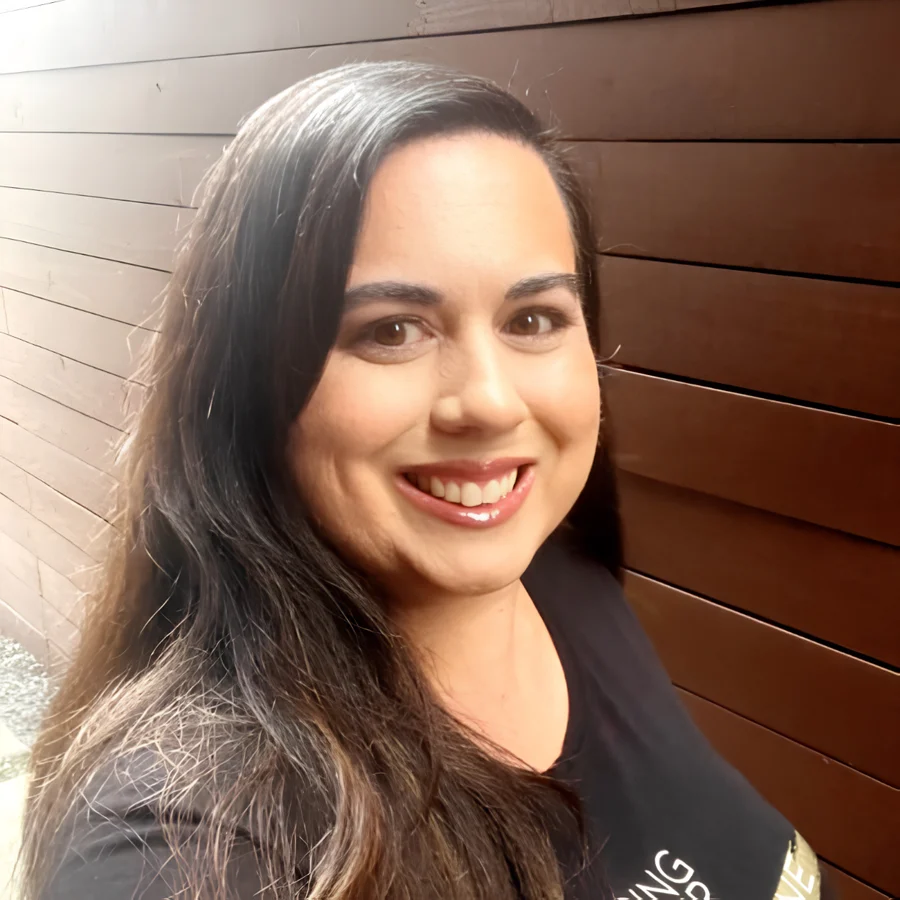
I've spent 20+ years in instructional design, and reviewing portfolios is a daily part of my work. Employers come to me when they need IDs because they trust the standard I hold. For 45 minutes, that standard is pointed at your portfolio, and I'll be honest with you about what's working and what's costing you interviews. That honesty is what you're paying for.
Less than the cost of one more month of applying without knowing what to fix.
Employers won't tell you why they passed. Friends and family will tell you it looks great. This is the third option: a professional read from someone with no reason to flatter you.
Whether your portfolio needs two tweaks or a real overhaul, you leave knowing exactly where you stand and what to do next. Both of those beat months of wondering.
Email info@learningstrategyanddesign.com and our team replies within one business day. Read the terms.
Jill Davidian is the founder of Learning Strategy & Design and creator of the Applied ID Portfolio Method. 20+ years in instructional design, including time as a hiring manager. 1,200+ AIDA graduates. More about Jill
Last updated: November 2026
Every application you send without knowing what to fix costs you a real opportunity. Book the session, get the honest read, and send your next application knowing your portfolio is doing its job.
$197 one time · 45 minutes · recording and written summary included